




Factory-Manufactured Back Pans vs. Field-Built: What’s the Difference?
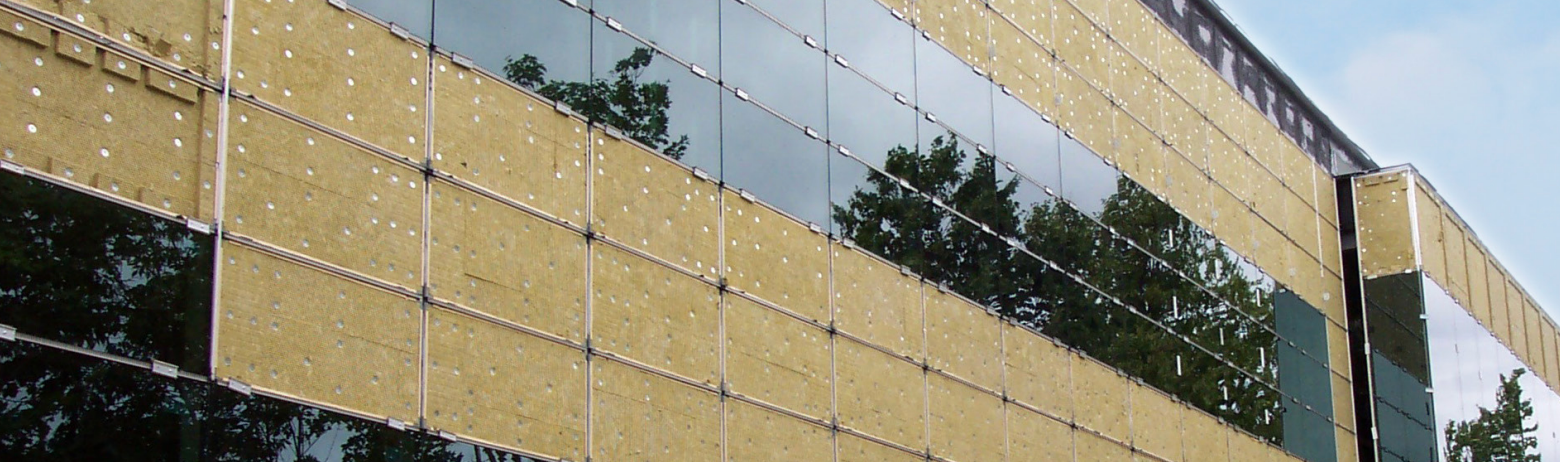
Back pans aren’t something that professionals spend a lot of time thinking about when they’re making design decisions for a project. However, they play a critical role in a building’s fire safety.
Understanding how these systems are fabricated, installed and perform over the life of a building can help architects and contractors choose the right type of back pan for a particular project.
What Are Back Pans?
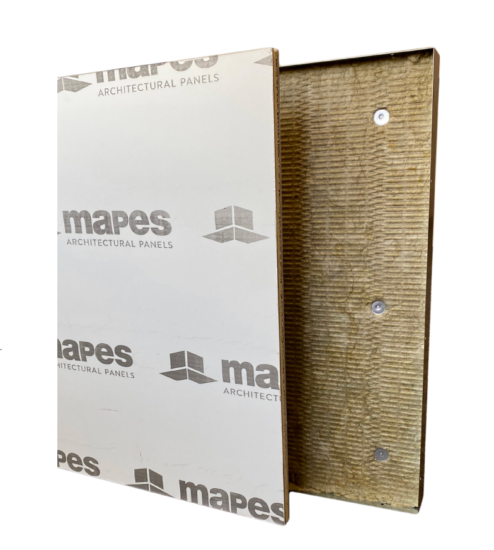
Installed behind architectural panel systems, back pans serve primarily as a fire-stopping component, closing off the cavity to prevent the spread of fire and smoke between floors.
This function is central to perimeter fire containment systems, which the 2015 International Building Code (Section 715.4) requires at the intersection of non-rated curtain walls and fire-resistance-rated floor assemblies, per ASTM E2307.
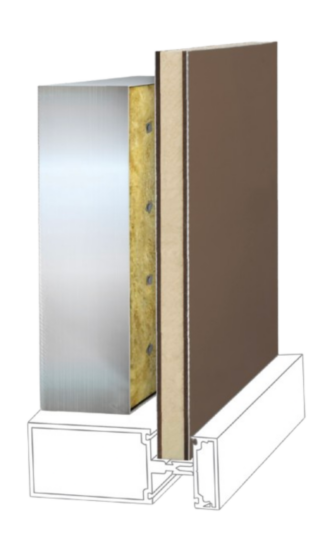
Beyond fire-stopping, back pans form the cavity that houses the assembly’s insulation, contributing to the wall’s overall thermal performance. They are also commonly incorporated in spandrel areas as part of a shadow box assembly, contributing to both fire safety and the visual depth of the façade.
Common Materials and Applications
Back pans are most commonly fabricated from galvanized steel, which offers strength and cost-effectiveness for most commercial applications. However, aluminum back pans are selected when the assembly requires a painted or factory-finished surface — particularly in visible spandrel or shadow box applications — or when paired with an aluminum-faced panel assembly.
These components are installed into curtain wall systems, typically behind a glass or metal panel in the glazing pocket at spandrel conditions, and are sealed and attached to the curtain wall framing behind opaque glazing areas.
Back pans are used across office buildings, healthcare facilities, educational campuses, retail developments and other commercial structures.
Why Back Pans Matter in Architectural Panel Systems
Because the two primary fabrication methods each come with distinct trade-offs, exploring the differences helps teams choose the right approach for their specific build.
Understanding Your Options: Factory vs. Field Fabrication
At a high level, the decision comes down to balancing speed and uniformity against real-time field flexibility:
- Factory-manufactured pans are precision-engineered in a controlled environment and arrive at the job site ready for installation, keeping tight construction schedules on track.
- Field-built pans are fabricated on-site, giving installers the flexibility to adapt materials to actual, as-built conditions on the fly.
Here is a closer look at how these two methods work, what they offer and how they impact a project’s bottom line.
Factory-Manufactured Back Pans
However, before deciding if they’re right for your particular job, it helps to understand their specific capabilities and design tolerances.
How They’re Made
Factory-manufactured pans are produced in controlled manufacturing facilities using automated equipment and precision-forming processes.
Sheets of aluminum or steel are cut, bent and assembled according to the exact measurements in approved project specifications, allowing large quantities of uniform units to be produced at once.
Quality Control and Precision Engineering
This controlled environment gives manufacturers a level of quality assurance that’s difficult to replicate in the field.
At Mapes, our laser-cutting equipment and automated folding machinery allow for tight tolerances and consistent dimensional accuracy from one unit to the next, while eliminating the variability that weather, job site constraints or human error can introduce.
Advantages
Because factory-built pans arrive ready for installation, crews can move through the process quickly, with fewer alignment issues or installation errors. Less fieldwork also means a safer job site, simpler coordination among trades and the potential for faster schedules and lower lifecycle costs.
Precision matters most where fire performance is on the line. Because these units are built to the dimensions of a tested fire-stopping design, they keep installed assemblies fully aligned with their UL or Intertek listings. This minimizes any risk of deviations that could compromise the fire rating.
Potential Limitations
Field-Built Back Pans
Field-built back pans can’t match factory-made units on precision or uniformity, but they offer advantages that make them the better choice for certain projects.
How They’re Fabricated On-Site
Field-built pans are fabricated directly at the job site (typically by sheet metal contractors or installation crews) using raw metal stock cut, formed and assembled to fit the building envelope based on project-specific dimensions.
Flexibility in Custom Conditions
Because fabrication happens on site, installers can adjust components in real time to match actual site conditions rather than the original drawings.
This makes field-built pans well-suited to buildings with unusual specifications, irregular openings or design changes, particularly on renovation projects or complex façades where conditions don’t always match the plans.
Advantages
The biggest advantage of field-built pans is the flexibility. Crews can respond to unexpected conditions on the spot without waiting on shipments or revised factory orders, which simplifies coordination and keeps a project moving.
Potential Drawbacks
That flexibility comes at a cost. Field fabrication requires more labor and skilled craftsmanship than factory production, and dimensional consistency can vary from one component to the next, depending on the installation crew’s experience. This increases the risk of alignment issues and field errors.
Fieldwork is also subject to weather delays, site congestion and scheduling conflicts, any of which can slow timelines and lower overall efficiency.
The stakes are especially high where fire-stopping is involved, as these systems are only rated based on their exact tested configuration. Any field change — even a quick fix for an as-built condition — can compromise the fire rating and require a formal engineering judgment (EJ) to stay compliant.
Side-by-Side Comparison
A quick side-by-side look at how factory-manufactured and field-built back pans compare can make it easier to decide which option fits a particular project.
| Factor | Factory-Manufactured | Field-Built |
|---|---|---|
| Cost | Higher initial cost, but usually offset by faster installation, less rework and lower total project expenses | Lower initial cost, but labor demands and field inefficiencies can drive up total expenses |
| Labor | Requires less on-site labor as fabrication happens off-site | Labor-intensive; accuracy depends on the skill and experience of the sheet metal crew |
| Installation Time | Faster installation when projects don’t require last-minute changes | Slower to install, but more adaptable to last-minute adjustments |
| Performance & Durability | Greater consistency and quality control support better weather resistance and envelope performance | Durability depends on the expertise of the installation crew and the quality of workmanship |
| Risk & Quality Assurance | Strong quality control reduces the likelihood of field errors and rework | Outcomes can be affected by workmanship, weather and job site coordination |
| Fire-Stopping Compliance | Built to match exact UL/Intertek listed dimensions | Field adjustments risk deviating from tested configuration |
| Project Type | Tend to be the better fit for large commercial projects with repetitive panel layouts, tight construction timelines or limited availability of skilled field labor | Tend to work better for smaller projects, retrofits or renovations and buildings with irregular or non-standard specifications |
How To Make The Best Decision For Your Project
To determine which fabrication path makes the most sense for your next build, ask your project team four key questions during the pre-construction phase:
- What is our labor landscape? If skilled local sheet metal labor is scarce or expensive, factory-built units eliminate that constraint.
- How predictable is the structure? New, repetitive commercial builds favor the speed of factory manufacturing. Complex retrofits benefit from the real-time adjustments of field fabrication.
- Where is the scheduling bottleneck? If you have factory lead time to spare but need to minimize on-site installation time, go with factory pans. If you need to start work on-site tomorrow, build them in the field.
- Does this condition require a UL- or Intertek-listed fire-stopping assembly? If so, factory-built units give you an exact, listed fit out of the box. If you build in the field, any deviation from the listed design can trigger a costly EJ.
Answering these questions early ensures you won’t get locked into a fabrication method that clashes with your job site realities.
Secure Your Building Envelope with Mapes
At the end of the day, a metal panel system’s fire and thermal performance depends on getting the back pan right. Choosing the wrong back pan approach can lead to costly field errors, scheduling delays and compromised fire performance.
When you work with Mapes, you eliminate that risk. We deliver industry-leading insulated back pans engineered for exceptional fire-stopping performance. Designed for seamless integration, they combine mineral wool insulation with UL- and Intertek-approved systems to support NFPA 285 compliance.
By sourcing your back pans from a trusted manufacturer, you secure tight tolerances, reliable lead times and the technical support your installation crews need to get the job done right the first time.
Don’t leave your building envelope to chance. Contact our team to request a quote today.